1 Jun 2006

Movie Review - Fanaa

I am on a week’s leave at home now and with time hanging heavy on my hands, doing all sorts of random things. The more productive activities have involved getting a dental check up done - good teeth, a medical check up done - alive and kicking - and writing my blog. The not so productive stuff included watching Fanaa yesterday.

If I were to draw up a list of things that make a Bollywood movie successful, I would include – produced by Yashraj films, starring two hot favourites, excellent costumes and sets, good locales, good photography, good technical quality and atleast one good song. Please note that this list does not include good screenplay, good story, good acting and other such meaningless stuff. Fanaa passes the successful Bollywood movie test quite easily.

The first half reminded me a lot of the 5th term projects in B-School. Cut and paste from the most obvious sources on the net till it was a complete kitsch of various clichéd stuff with not much originality thrown in. Heck, 5th term in B School is meant for sacking out and hence one is easily forgiven. But Fanaa.. Characters mouthing stuff like ‘Ma kehti hai ki kuch paane ke liye kuch kona hai’. Aarrgh. Also the shayaris that all characters quote back and forth become a bit tiresome after a while. You would think the characters couldn’t say ‘May I use the ladies’ without composing a nice shayari to say it. Infact when Kajol tells her mom that she is in love, her mom quotes shayaris and ignores fairly reasonable questions like 'how does he earn his living?'

The only ray of sunshine is Kajol. She acts the part of a blind girl with her usual verve and charm and makes you realise why she is the star she is. Rani waddling like a duck in Black, making blind people look imbecilic, can learn a lesson. Perhaps Kajol’s portrayal may not be the most realistic but atleast it makes you see her as a normal person. Aamir looks like a fat, smug and leery middle-aged man with his long hair.

Just before the second half begins, Aamir cuts his hair and gels it. I think the movie’s attractiveness factor went up by two notches just on account of this. The second half of the movie was like the B School projects from the 2nd term. Your grades still matter at this point and hence the quality of cut and paste is more professional. You have fished the net really well and have so many sources that the end product looks almost original and quite snazzy. And in the movie, Kiron Kher’s character has died, so you know the movie can only get better.

Coming back to the story, Kajol has been under the impression that Aamir is dead - har har. As though yash chopra would easily kill off a hero who costs INR 30 M. But fate brings them back together. A cutesy child is introduced and at regular intervals says cutesy things always referring to him self in third person. Tabu comes in as a part of our intelligence force. As my friend pointed out, she looks like a top notch McKinsey consultant mouthing some aggressive stuff like ‘Can’t you do something about the weather?’ Shiny Ahuja comes in a blink-and-you-will-miss-him role. Sundry characters join the fray looking for a Kashmiri terrorist who has stollen some key nuclear part and will shortly blow up India once he gets it to his team .

Oh by the way, the whole story is about the Kashmiris fight for their independence. If you actually hope to get an idea of why Kashmiris are frustrated enough to take up arms, then please skip this movie.


So finally we come to the end. Aamir Khan and Kajol are in a stand off facing each other with automatics. One, a hard core terrorist trained to kill and the other, soft and round from years of leading a cosy life at home. But when it is time to pull the trigger, the latter wins.

Bharat Mata ki jai.

Bhutan - Day 6 - Bhumthang - Punakha


As per routine we were all up, nice and chirpy. By 7.30 all of us were in the car and on the way to Punakha. At 8, P discovered that her mobile phone was missing. At 8.30, P and self were back in the hotel searching for the lost mobile phone. W and S had decided to get off and walk a bit while we searched. We finally caught up with the guys at 9.30 without finding the mobile. P was quite down and could not figure out where she had lost her mobile. Not to mention all that waking up early had turned out to be wasted effort.

W and S decided to stop at the handicrafts store where we had stopped on our way to Bhumthang and settle for some jute mats I had bought. They had accepted the fact that their bargain table runner would never be found and it was better to pick up something they liked instead of agonizing over the decision. After this we stopped for breakfast at Karthungama general stores in Chumey. It was too late for breakfast, but the friendly shopkeeper told us he could get us some samosas and momos. The samosas were good and the conversation with the shopkeeper even better. He clearly understood that India was very important in Bhutan’s scheme of things and said as much. We were quite used to being important around here but it never hurts to hear somemore good stuff :> We were quite enamoured of his bar by then and decided to pose in front of his little bar holding up bottles of colourful concoctions. For some reason one of the local liquors was green in colour and looked like hair oil. The others looked equally exotic. Though at Rs15 a glass, appearance was not a factor in consumption - as P had proved loyally in the previous days.

We were now retracing our steps. The LP guide had a much-thumbed look and was quietly ignored from this point on. At Wangdue we had one of our usual tea breaks and watched as a pretty rainbow began to form even as the sun shined. During the trip to Ura valley the previous day, W and S had given a lift to a monk who had told them how to test if someone had reached enlightenment. Apparently when an enlightened person died the sun shone even as it rained and the earth shook and there would be a rainbow in the sky. Guess all of us decided that we were halfway on the road to enlightenment with this display by nature. The monk had also given them further insights into the life at the monastery. Any family could send a son to become a monk. You needed to go through 9 years of education and 3 years of training and at any point you could drop out if the life did not suit you. Not too bad but still not a very easy life.

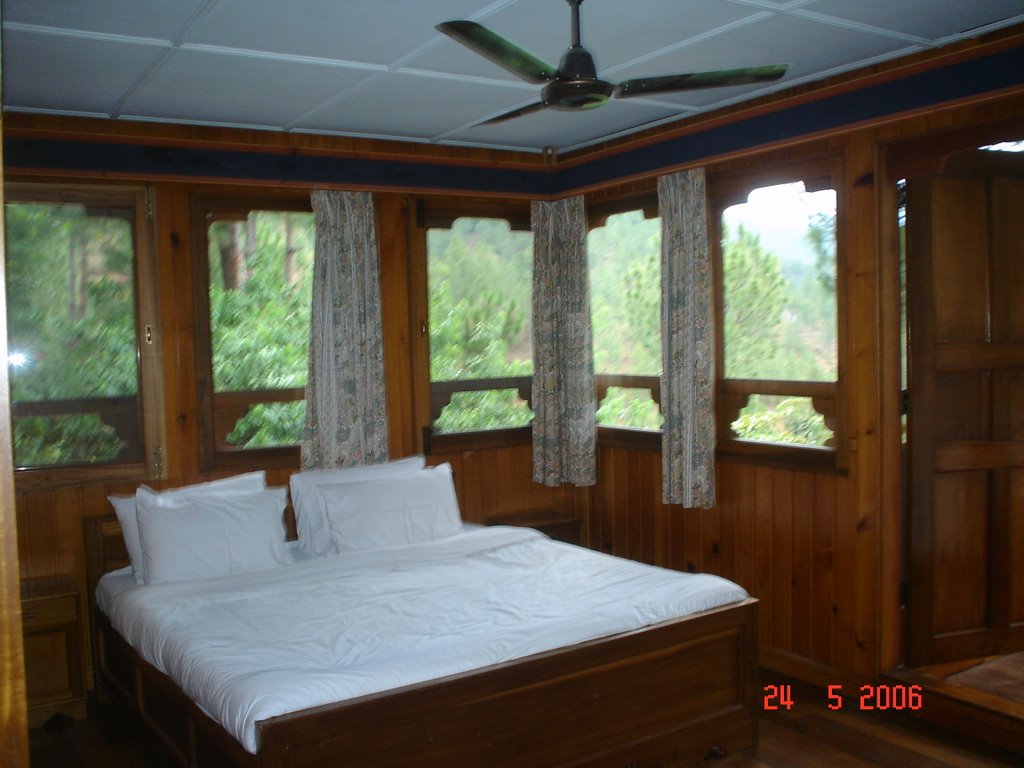
We reached Punakha and to our pleasant surprise the hotel had given us a lovely twin cottage with a balcony overlooking the town and the river. The room was full of windows, and you felt like you were in the middle of a garden - check out the photo . We ordered plenty of tea, food and beer and sat back to enjoy the view and have long discussions on life, work and everything.

At 10 p.m, P discovered that her mobile phone was in her handbag after all. Talk about anti climaxes.

Bhutan - Day 5 - Bhumthang


This was to be our first day of rest after all the travel in the last few days. P and self voted to hang around near the hotel and visit the nearby town/village. S and W were too geared up to do such soft stuff and left to visit Ura valley, a 4-hour trip. After a lazy breakfast, P and self started to explore the town. The first stop was naturally the ISD booth since both our mobile phones had refused to work after stepping into Bhutan. I started chatting with the shop girl who turned out to be a big fan of Ekta Kapoor’s serials. We quickly ran out of common topics to discuss. She did mention some interesting things. One heartening thing was that most children went to school in Bhutan and since the medium of instruction was English, most people could speak atleast a smattering of the language. The other thing was that pay scales in Bhutan were not as bad as I had thought they would be. A senior level teacher could earn about Rs. 15000 in a month.

P and self wandered about the place and managed to buy some souvenirs. It was becoming obvious by now that our limited resources of cash would be stretched. Most shops don’t accept credit cards and ATMs as a concept don’t exist. Still the temptation to shop was too high. So scrimping money by walking back on the return instead of using a cab, we ended up at the hotel hot and dusty. Bhumthang’s much promised cold weather was nowhere in sight. P, W and S had all brought thermal wear along and I could smugly congratulate myself for not investing money in a set.

In the afternoon, all of four us went to the Burning Lake in the Tang valley. The name sounded interesting and the story behind it even more interesting. What was not interesting was the actual place. To begin with the story – the lake got its name when one of the famous monks jumped into the lake with a lamp and swore that if he were indeed the miracle man the people supposed him to be, he would return with the lamp still burning. Sure enough after a while he appeared with the lamp burning. The actual lake was not a lake at all but a broad portion of the river. There was a rickety bridge built over this part. The water was an evil looking black. Worst of all was this swarm of insects that attacked us when we stepped into the area. They were the size of small black beads; recklessly hit us everywhere including our eyes, ears and nostrils. After a while the four of us were worried that we would slip into the lake inadvertently while trying to keep the locusts away. Which as per local mythology was not a bad thing since there was a temple in the depths of the lake. However, for the greater good of mankind, we made our way back.

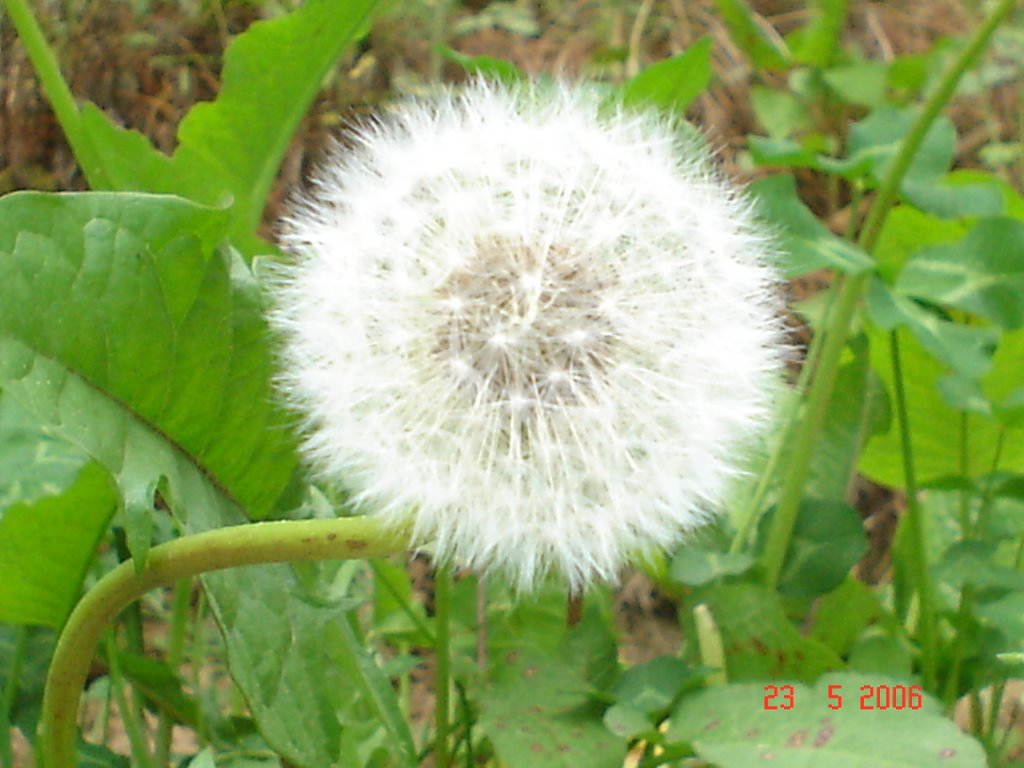
The next stop was a more traditional one – the Jakar Lakhang. The monastery had some fantastic views again and we could see young monks scurrying around trying to complete their chores for the day. S and W came up with a completely new photography technique at this point to get perfect close ups. It involved holding the camera as close to the object as possible and clicking - my handiwork is the snap in this post. Clearly delighted by this discovery the duo spent the entire way down with the attitude of NASA scientists who had just discovered there was life on Mars.

We had sent Rajesh away to get some rest and decided to wander down the main market and then shop for more souvenirs at the Handicrafts emporium located beyond our hotel. The quality of the products was clearly superior to any of the others we had seen till then. As usual P and self found stuff to buy and P even managed to use her VISA card.

Dinner was at a local spot were we had had lunch and tea. The Bhumthang hotel served generous portions of rice, the girl at the bar had the prettiest of eyes and sweetest of smiles - as vouched by W and S - and it was too late to have too many options. W exchanged notes with a local informing him that he stayed in the same area as Salman Khan. The locals were usually Bollywood fans and such information was guaranteed to generate interest in a person. At the end of the conversation, the pretty girl, her pretty friends and sundry people in the bar were hanging on to every word that W uttered.


We drove back to the hotel and settled for yet another night of sound sleep with absolutely no noise of vehicles, people or civilization as such.

Bhutan - Day 4 - Punakha - Bhumthang


W had warned us that the drive to Bhumthang would take a long time and we had better leave early. Besides, Rajesh, our driver was not feeling too well and we wanted to be done with the drive as soon as possible. P had slowly begun to win the battle over going back into perennial snooze mode after the alarm rang. We left by 8 a.m.

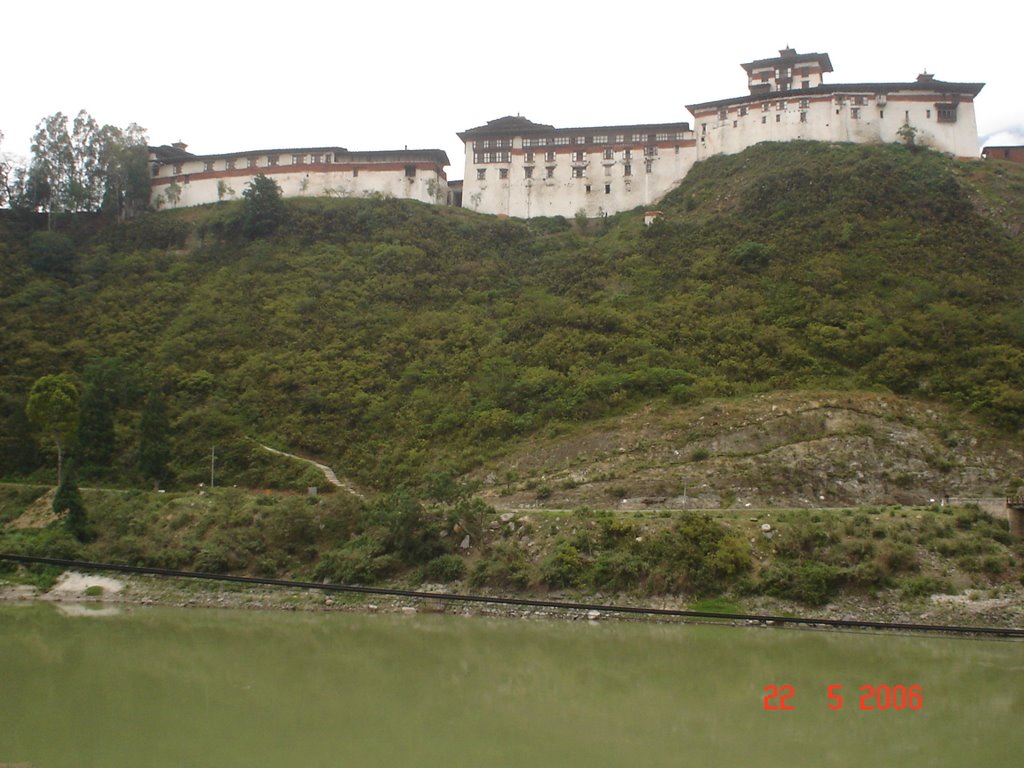
Bhumthang was a six-hour drive from Punakha and went through some key towns like Wangdue Phodrang and Trongsa. Wangdue check point was the first. As usual, it was a picturesque point located close to a Chu or river, in this case the Punak Chuu and one could see the Wangdue Dzong from there. We had all understood and assessed each other’s photography skills by then. W was the clear leader. Armed with an excellent camera and dollops of cockiness, he took some great pictures. S was next. He had a good camera and a steadily improving eye and managed to get W’s approval once in a while. P’s camera would conk off everyday after taking about 10 snaps. She claimed that quality was what counted. I quickly became famous for my ‘Patel’ snaps. This term had been coined in honour of Gujarathis in the U.S. who never failed to take snaps posing next to the name board of any monument they were visiting. Relatives being shown the snap later would know for sure that you had actually visited the place. So true to form, I jumped out and quickly and got my photos taken in front of the Wangude Dzong - that is the picture of the dzong without me.

Around eleven all of us felt hungry and stopped at a small hotel on the outskirts of Wangdue. Hotel Trashi Delek was located conveniently on the main road and we could sit on the walls and watch the world pass by as we sipped our teas and ate the horrible Maggie noodles. Most of us could not finish the food and turned to our excellent supply of snacks for reinforcements.

The route to Trongsa went over rather high mountains and deep below you could see the river flowing parallel to the road. The town was also located at a fairly high altitude. There was a conclave being held by the Crown Prince and the town was filled with several important looking people. I took the mandatory patel snap in front of the Trongsa Dzong and we were on our way. At some point the road began to drop to the river’s height. The bridge over the river served as an entry point to the road to Bhumthang. The guard there persuaded us to give a lift to a local person. Somehow giving lifts to complete strangers in Bhutan does not seem a stupid thing. The locals are quite pleasant. Besides, Rajesh had this innate ability to make friends wherever we went and was a good judge of people. The only problem was our local person could be smelled from a mile away and a two feet distance was not the best to handle the stink. We got used to that in some time though. Besides the countryside had begun to turn even more beautiful if that was possible.


W decided that it was time to educate his brood about the flora and fauna of the Himalayas. Having traveled in Sikkim and Ladak, his superior knowledge was acknowledged by us all. We got a little suspicious though when he started classifying all flowers into five categories – Primola, Orchid, Magnolia, Rhododendron and Juniper. If anyone pointed out that the Primola from ten minutes ago had had fewer petals and was darker than the current one, W blamed it on altitude differences. W also classified trees into pines, oaks and deodars and did not even bother to explain the presence of other obviously different looking trees.


While ingesting all the botanical lessons, we also got to observe the local fauna. Yaks began to show up at regular intervals. After my Takin experience, I was too scared to take photos. Not to mention, they were a bit smaller than I had expected and did not look too impressive.

It was around three by now yet none of us were hungry. The road had stopped going through thick and colourful forests and had started entering lush meadows with mountains in the background. A handicrafts emporium announced the first sign of civilization. We promptly took a break and shopped there.

At around 4 we reached Mountain Lodge where we were to stay in Bhumthang. The rooms had electricity but no electric heaters and definitely no phones. We ordered tea in the room and settled down to watch the pretty view from the windows. Once we were done with the tea, it was time for dinner. We had the second worst meal of our trip then. Since we had had the first worst one in the morning, all of us did manage to eat something before settling down for the night.

Bhutan - Day 3 - Thimphu - Punakha


The plan was to go to Punakha and Bhumthang located in Central Bhutan from here. Special entry permits are needed for both these places and you need to go to the office of Immigration on Norzin Lam for this. It is located in a small building close to the National Art Museum. This leg could only be done once permits for Paro and Thimpu have been obtained and since both are granted on arrival, the earliest you can get the permits for Punakha and Bhumthang are the first working day after arrival. S and W had got theirs done on Friday. Having arrived on a Saturday morning, P and self now stood in a queue for our permits. The gentle lady looking after the desk informed us we could get ours at 4 p.m. After some heavy duty groveling she told she will get it done by 1 p.m. This still meant that we would not have the early start we wanted and would have to skip river rafting near Punakha in the afternoon. At any rate, river rafting in Bhutan is more expensive and less interesting than in Rishikesh, so it was no big loss.

We killed time by wandering about the National Art Museum where the curator gave us insights into the Bhutanese history and culture. Bhutanese men and women can get married any number of times as long as they can afford it. A case in point – the king has four wives. Most surprising was the information that Bhutanese too have a caste system and typically people don’t marry between castes. Also Bhutanese getting married to other nationals lose citizenship and consequently other benefits. This of course was a bit of a dampener on any plans we may have made to marry a local and settle down in Bhutan after looking at the awesome scenery and friendly people.

We continued to wander around Norzin Lam buying a few stuff. W and S split with us and later we learnt that they had an instructive discussion with the ALM head of the Royal Bank of Bhutan. State Bank of India holds a 20 % stake in this bank and the country has a deficit with India. The sheer amount of dependence on India by Bhutan was becoming more obvious by the minute – the Indian army defends Bhutan on its Northern border with China, most of its trade is with India, Food Corporation of India supplies food grains, the list goes on. Little wonder that the people were quite nice to Indians.

P and self managed to grab a quick lunch at the Plum’s café and caught a taxi back to the Immigration office to make it on time. The passes were ready and without further ado all of us got into the jeep for the drive to Punakha.

As you enter the mail road to Punakha, there is a small checkpost where you need to submit your permits. By this time, everyone was ready to answer nature’s call again. The cold weather makes for frequent stops. P and self discovered what people in villages actually use. A small wooden hut jutting out over a stream/river/any water body with a hole on the floor. Simple and effective.

After an hour’s drive, we reached one of the prettiest places in Bhutan, the Do Chu La Pass. At roughly 3150 mts this is the highest point on the road to Punakha and one of the most picturesque. A small mound of Chortens has been built at this point in a manner that enhances the beauty of the place rather than mar it. By some stroke of luck our jeep developed a puncture at this point, or else we would have never walked from the Chortens to the Do Chu La café.
There is one awesome part in the movie, American Beauty that goes “there's so much beauty in the world. Sometimes I feel like I'm seeing it all at once, and it's too much, my heart fills up like a balloon that's about to burst... And then I remember to relax, and stop trying to hold on to it, and then it flows through me like rain”. All right, possibly I am being a bit dramatic. There is something though about seeing the Himalayas in all its splendour that really makes you want to grab as much as you can in a minute. The walk was something like that till all of us just settled into our own paces and let the green gorges, the distant snow peaks, the sunlight flickering on and off just flow through us.

Do Chu La Café brought us back to reality. S and W had been agonizing over the price of a table runner ever since they passed up a good deal in Thimpu and had started a routine of checking the prices of table runners and then moaning over how they missed a good bargain. Cafés at such pristine points usually have the most expensive souvenirs and the price of the table runner scared us thoroughly. We checked the prices of the food before ordering anything.
We were on our way again. It was evening by the time we pulled into a garage, which fixed the puncture for us. By twilight we were in the Zangto Pelri Hotel in Punakha. It was too late to go out and see the dzongs, so we decided to chill out and have another round of tea. The room had no phones and the only way to avail of the room service was to walk down and order tea. W made some attempts at attracting the attention of a hotel assistant by gesturing from the balcony of the room. Possibly he came out looking too coy but the embarrassed lady did not turn up at all. All of us went down for dinner and used the clever trick of ordering food a la carte.